Home
Home
Bringing MetaHuman to Fab
Bringing MetaHuman to Fab
Designing a clearer, more scalable MetaHuman listing experience across Fab, Launcher, and Unreal Engine.
Designing a clearer, more scalable MetaHuman listing experience across Fab, Launcher, and Unreal Engine.
Designing a Ratings & Reviews System for Fab
Improving trust and decision-making for creators and buyers
Bringing MetaHuman to Fab
Designing a clearer, more scalable MetaHuman listing experience across Fab, Launcher, and Unreal Engine.
Bringing MetaHuman to Fab
Designing a clearer, more scalable MetaHuman listing experience across Fab, Launcher, and Unreal Engine.
Bringing MetaHuman to Fab
Designing a clearer, more scalable MetaHuman listing experience across Fab, Launcher, and Unreal Engine.
The problem
The problem
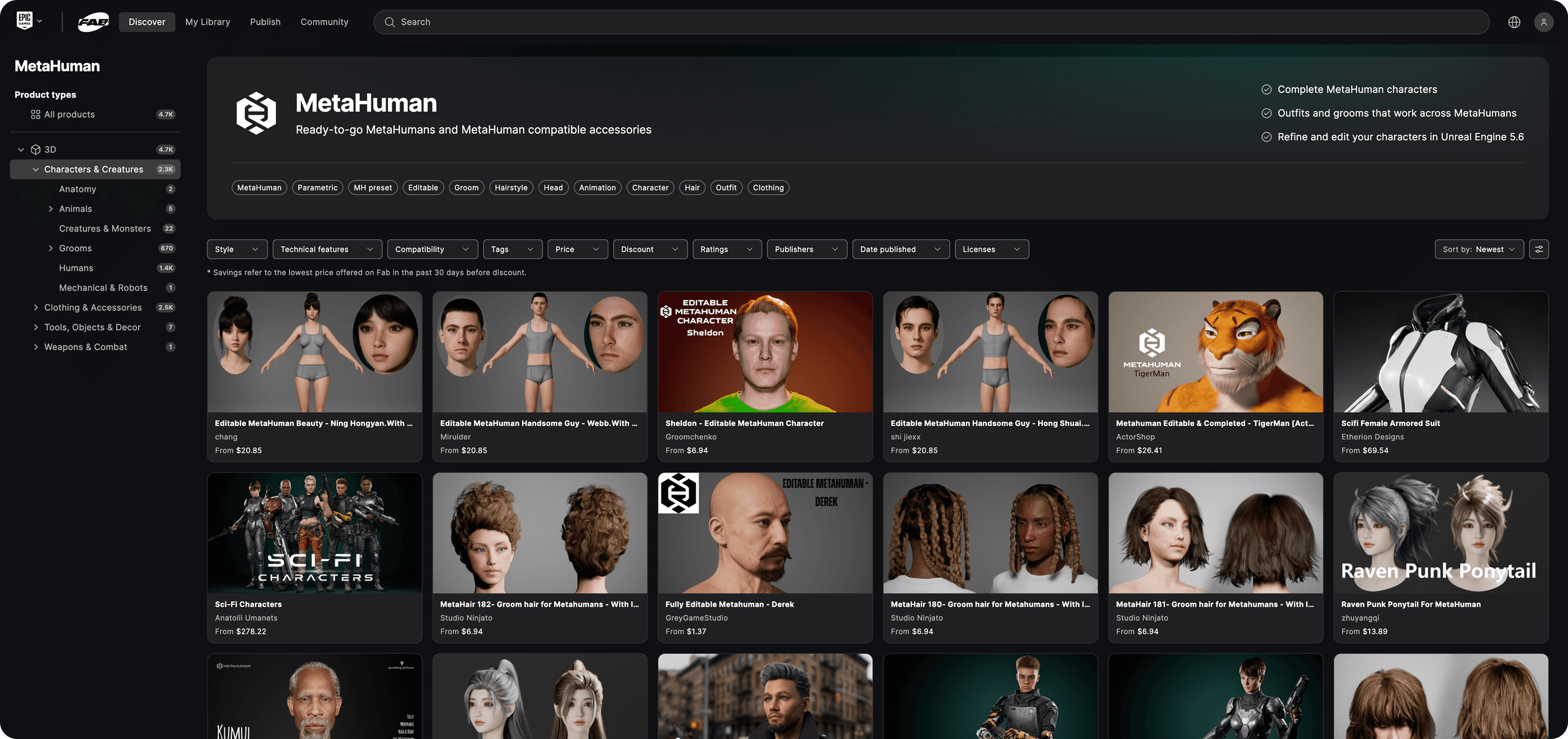
MetaHuman assets were on Fab, but without a dedicated experience to support them. Sellers had no proper way to list MetaHuman-specific files, and buyers had no clear way to discover or evaluate what they were looking at.
Fab already supported a range of asset types, but MetaHuman came with its own ecosystem, file structure, and technical requirements. Dropping it into a generic listing experience was not enough.
MetaHuman assets were on Fab, but without a dedicated experience to support them. Sellers had no proper way to list MetaHuman-specific files, and buyers had no clear way to discover or evaluate what they were looking at.
Fab already supported a range of asset types, but MetaHuman came with its own ecosystem, file structure, and technical requirements. Dropping it into a generic listing experience was not enough.
The team
The team
Product manager
Product manager
Product manager
Engineers
Engineers
Engineers
UX writer
UX writer
UX writer
MetaHuman team
MetaHuman team
MetaHuman team
My role
My role
Conceptualization
Conceptualization
Conceptualization
Information architecture
Information architecture
Information architecture
Cross-functional alignment
Cross-functional alignment
Cross-functional alignment
Design
Design
Design
Dev handoff
Dev handoff
Dev handoff
I led the product design work for bringing MetaHuman into Fab, shaping how technical information was structured and presented across the buyer and seller experience from concept through to developer handoff.
I led the product design work for bringing MetaHuman into Fab, shaping how technical information was structured and presented across the buyer and seller experience from concept through to developer handoff.
What I wanted to achieve
What I wanted to achieve
My goal was to give MetaHuman assets a dedicated home on Fab that made them easier to list, easier to understand, and easier to evaluate.
I needed to support sellers uploading MetaHuman-specific files without forcing them into a generic asset flow, while also giving buyers enough structured information to quickly understand what they were looking at.
My goal was to give MetaHuman assets a dedicated home on Fab that made them easier to list, easier to understand, and easier to evaluate.
I needed to support sellers uploading MetaHuman-specific files without forcing them into a generic asset flow, while also giving buyers enough structured information to quickly understand what they were looking at.
Why this mattered
Why this mattered
MetaHuman was one of the clearest examples of where Fab’s existing marketplace patterns were not enough. Solving for it helped make the experience more workable for sellers, more understandable for buyers, and more scalable for the platform overall.
MetaHuman was one of the clearest examples of where Fab’s existing marketplace patterns were not enough. Solving for it helped make the experience more workable for sellers, more understandable for buyers, and more scalable for the platform overall.
How I approached it
How I approached it
MetaHuman was not just another asset category to slot into an existing pattern. It came with its own ecosystem, file structure, and technical requirements, which meant I needed to design the experience more intentionally than a generic listing flow.
The challenge was balancing that technical complexity with an experience that still felt clear, scannable, and useful.
I focused the work around three core questions:
MetaHuman was not just another asset category to slot into an existing pattern. It came with its own ecosystem, file structure, and technical requirements, which meant I needed to design the experience more intentionally than a generic listing flow.
The challenge was balancing that technical complexity with an experience that still felt clear, scannable, and useful.
I focused the work around three core questions:
What information does a buyer actually need?
What information does a buyer actually need?
Once the MetaHuman team defined the technical fields, I needed to understand them well enough to surface only what buyers actually needed in a way that felt useful and understandable.
Once the MetaHuman team defined the technical fields, I needed to understand them well enough to surface only what buyers actually needed in a way that felt useful and understandable.
How do I structure it clearly?
How do I structure it clearly?
I needed to organize and present that information in a way that felt scannable and informative, not like a wall of technical specifications.
I needed to organize and present that information in a way that felt scannable and informative, not like a wall of technical specifications.
How should the seller side reflect that?
How should the seller side reflect that?
I needed to make sure what sellers input during listing creation mapped directly to what buyers saw on the product page, so the experience stayed consistent on both ends.
I needed to make sure what sellers input during listing creation mapped directly to what buyers saw on the product page, so the experience stayed consistent on both ends.
The solution
The solution
How that showed up in the product:
How that showed up in the product:
The buyer side
The buyer side
The core of the buyer experience was the "Included formats" section on the product page. This is where buyers could see exactly what they were getting. For MetaHuman assets, that meant a lot more than just a file format.
I introduced a dedicated MetaHuman badge alongside the existing format badges like fbx and obj. This gave buyers an immediate visual signal that the asset was MetaHuman-specific, without disrupting the existing pattern.
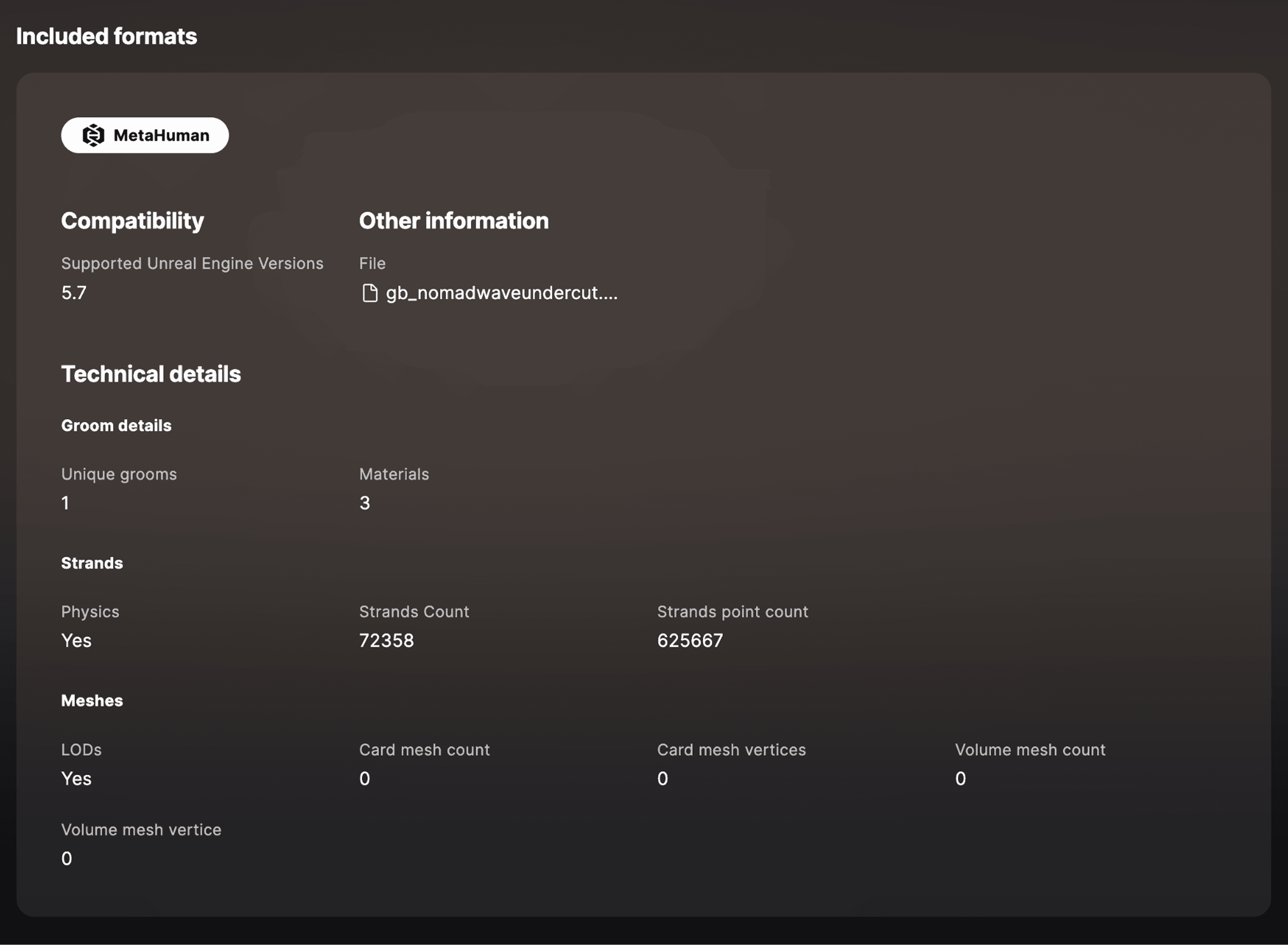
Below that, the technical details section broke down everything a buyer would need to know; but the fields weren't static. Depending on the type of asset (character, clothing, or groom), the technical details adapted to show only what was relevant. A character listing shows character-specific fields. A clothing listing shows clothing-specific fields. The structure stayed consistent, but the content was context-aware.
The core of the buyer experience was the "Included formats" section on the product page. This is where buyers could see exactly what they were getting. For MetaHuman assets, that meant a lot more than just a file format.
I introduced a dedicated MetaHuman badge alongside the existing format badges like fbx and obj. This gave buyers an immediate visual signal that the asset was MetaHuman-specific, without disrupting the existing pattern.
Below that, the technical details section broke down everything a buyer would need to know; but the fields weren't static. Depending on the type of asset (character, clothing, or groom), the technical details adapted to show only what was relevant. A character listing shows character-specific fields. A clothing listing shows clothing-specific fields. The structure stayed consistent, but the content was context-aware.
Groom asset
Groom asset
Clothing asset
Clothing asset
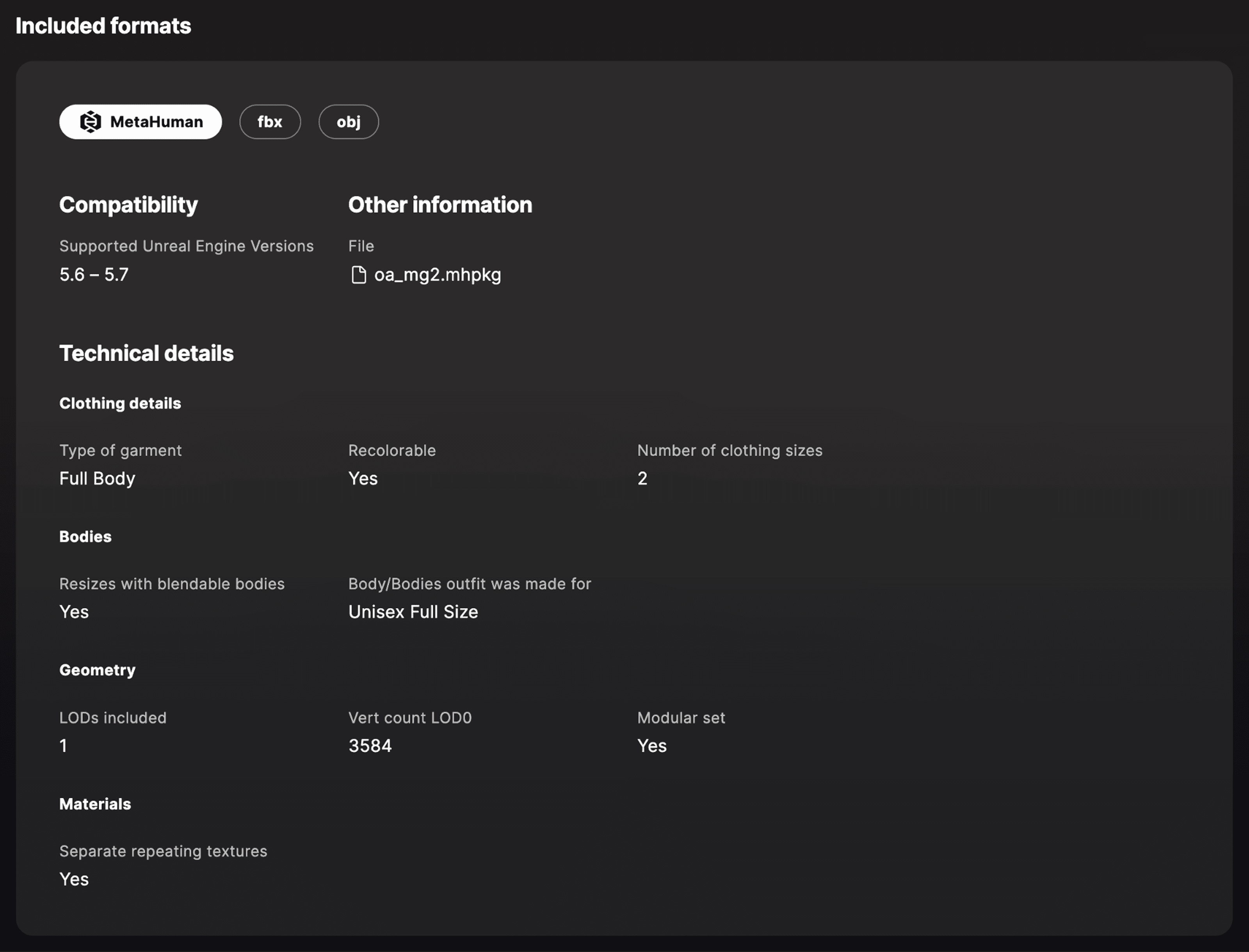
Technical details adapt based on asset type. Groom assets surface strand and mesh data, while clothing assets show garment, body, and geometry details.
Technical details adapt based on asset type. Groom assets surface strand and mesh data, while clothing assets show garment, body, and geometry details.
The seller side
The seller side
Once I had defined the buyer experience, I needed the seller side to mirror it clearly. When a seller uploaded their MetaHuman manifest file, the platform parsed it and automatically populated the technical details.
I focused on making sure sellers could see exactly how their information would appear on the product page. No guesswork, no surprises. What they put in was what buyers saw.
Once I had defined the buyer experience, I needed the seller side to mirror it clearly. When a seller uploaded their MetaHuman manifest file, the platform parsed it and automatically populated the technical details.
I focused on making sure sellers could see exactly how their information would appear on the product page. No guesswork, no surprises. What they put in was what buyers saw.
Across the ecosystem
Across the ecosystem
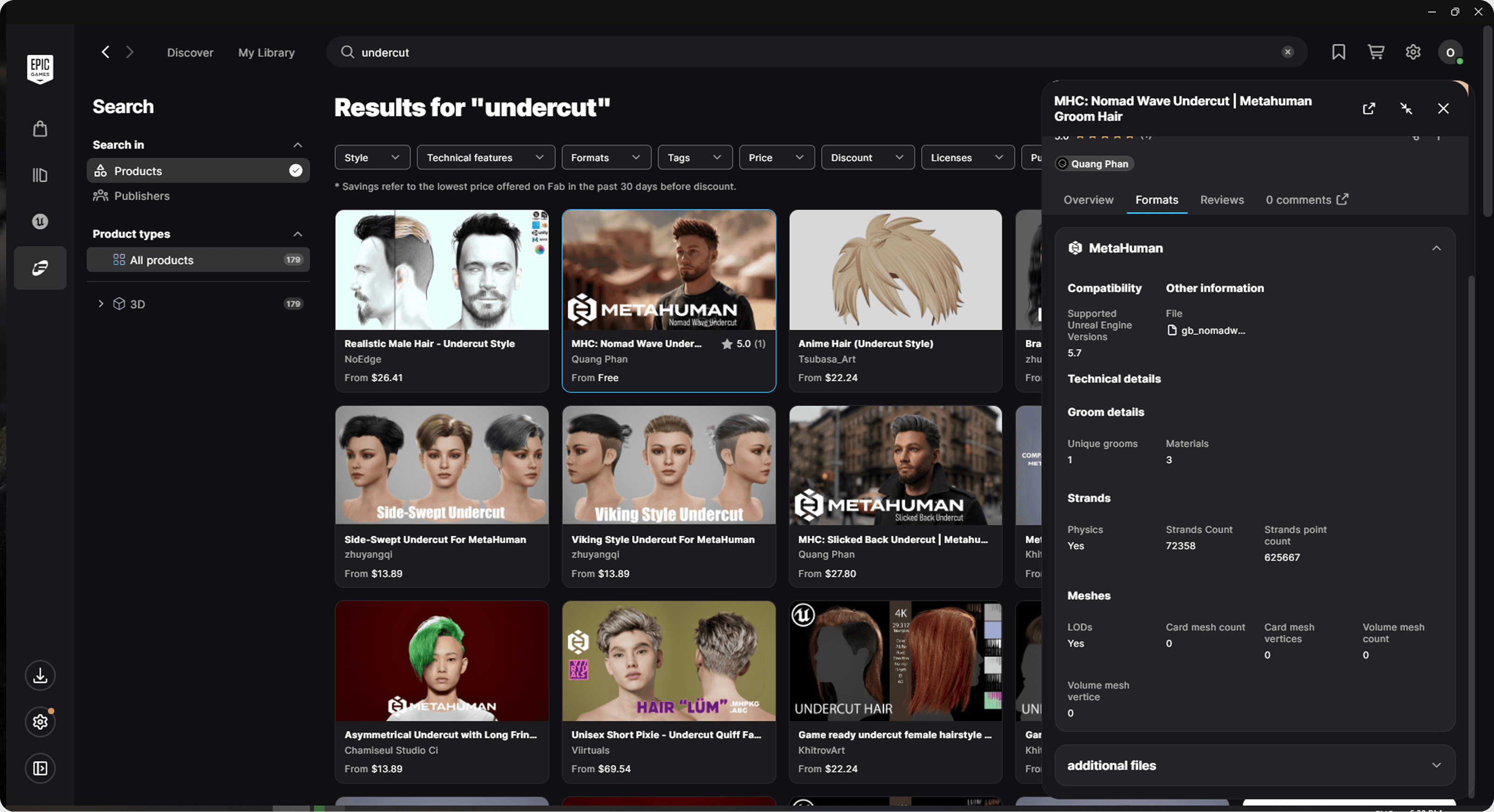
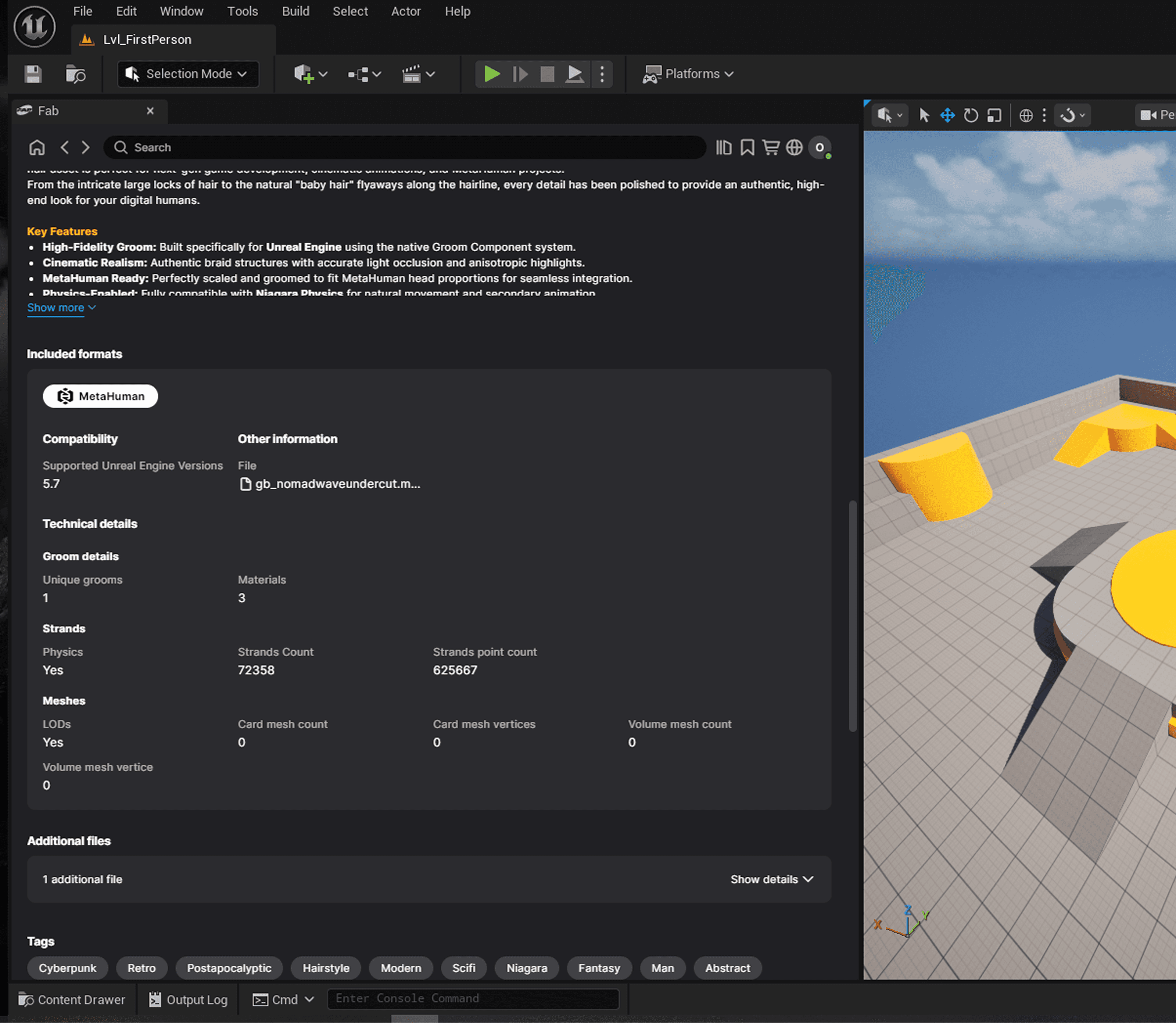
MetaHuman assets did not live on Fab alone. They also appeared in the Epic Games Launcher and the Unreal Engine Fab plugin. I needed the experience to stay recognizable and consistent across all three platforms while still adapting to the constraints of each environment.
MetaHuman assets did not live on Fab alone. They also appeared in the Epic Games Launcher and the Unreal Engine Fab plugin. I needed the experience to stay recognizable and consistent across all three platforms while still adapting to the constraints of each environment.
Epic Games Launcher
Epic Games Launcher
Unreal Engine Fab Plugin
Unreal Engine Fab Plugin
What changed?
What changed?
Supporting MetaHuman more intentionally on Fab made the experience clearer for sellers, more understandable for buyers, and more scalable for the platform.
Supporting MetaHuman more intentionally on Fab made the experience clearer for sellers, more understandable for buyers, and more scalable for the platform.
MetaHuman assets gained a clearer home on Fab instead of being forced into generic marketplace patterns.
MetaHuman assets gained a clearer home on Fab instead of being forced into generic marketplace patterns.
Technical details were structured to help buyers understand what they were looking at more quickly.
Technical details were structured to help buyers understand what they were looking at more quickly.
Seller-provided manifest data mapped more directly to the buyer-facing experience.
Seller-provided manifest data mapped more directly to the buyer-facing experience.
The project surfaced a broader opportunity to standardize technical detail presentation across asset types.
The project surfaced a broader opportunity to standardize technical detail presentation across asset types.
What started as support for one specialized asset type became a stronger pattern for how complex content could live on Fab.
What started as support for one specialized asset type became a stronger pattern for how complex content could live on Fab.
Looking back
Looking back
This project was really just the beginning.
While bringing MetaHuman to Fab, I realized the same thinking could apply across other asset types on the platform, not just MetaHuman. The work surfaced a broader opportunity to standardize how technical details are presented across formats like Unreal Engine, Unity, and beyond.
That direction continued after this project wrapped up, and it reinforced something important: solving one specific use case can reveal improvements that strengthen the broader system.
This project was really just the beginning.
While bringing MetaHuman to Fab, I realized the same thinking could apply across other asset types on the platform, not just MetaHuman. The work surfaced a broader opportunity to standardize how technical details are presented across formats like Unreal Engine, Unity, and beyond.
That direction continued after this project wrapped up, and it reinforced something important: solving one specific use case can reveal improvements that strengthen the broader system.